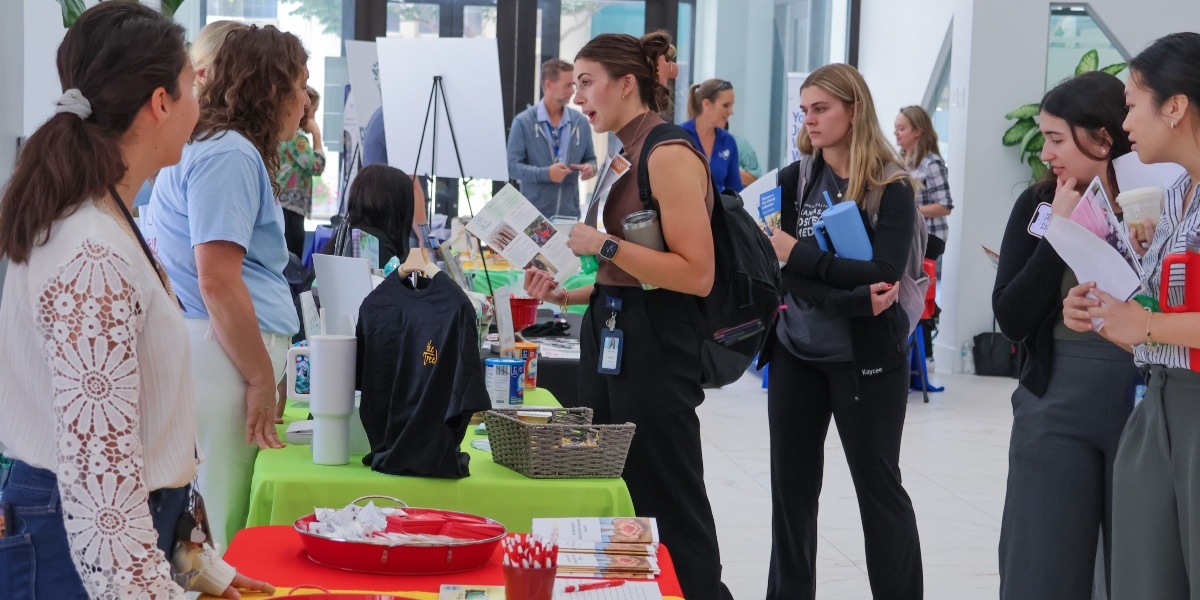
KansasCOM students connect with Wichita nonprofits to understand how community conditions, relationships, and access to resources influence patient health.
Osteopathic medicine begins with the idea that the body is a unified whole, comprising body, mind, and spirit, and is capable of self-regulation when its systems function in harmony. Doctors of Osteopathic Medicine (DOs) also recognize that the interrelationship of anatomical structure and function can guide effective treatment for their patients. At Kansas Health Science University’s Kansas College of Osteopathic Medicine (KansasCOM), student doctors learn these principles, and they also learn to look beyond biology to understand that health outcomes are shaped by the broader context of a patient’s life.
Economic stability, education, health care access, environmental conditions like housing, and social support—known as the social determinants of health—can have profound impacts on wellness and healing. This interaction of social factors and health is the throughline of the annual Community Engagement Fair.
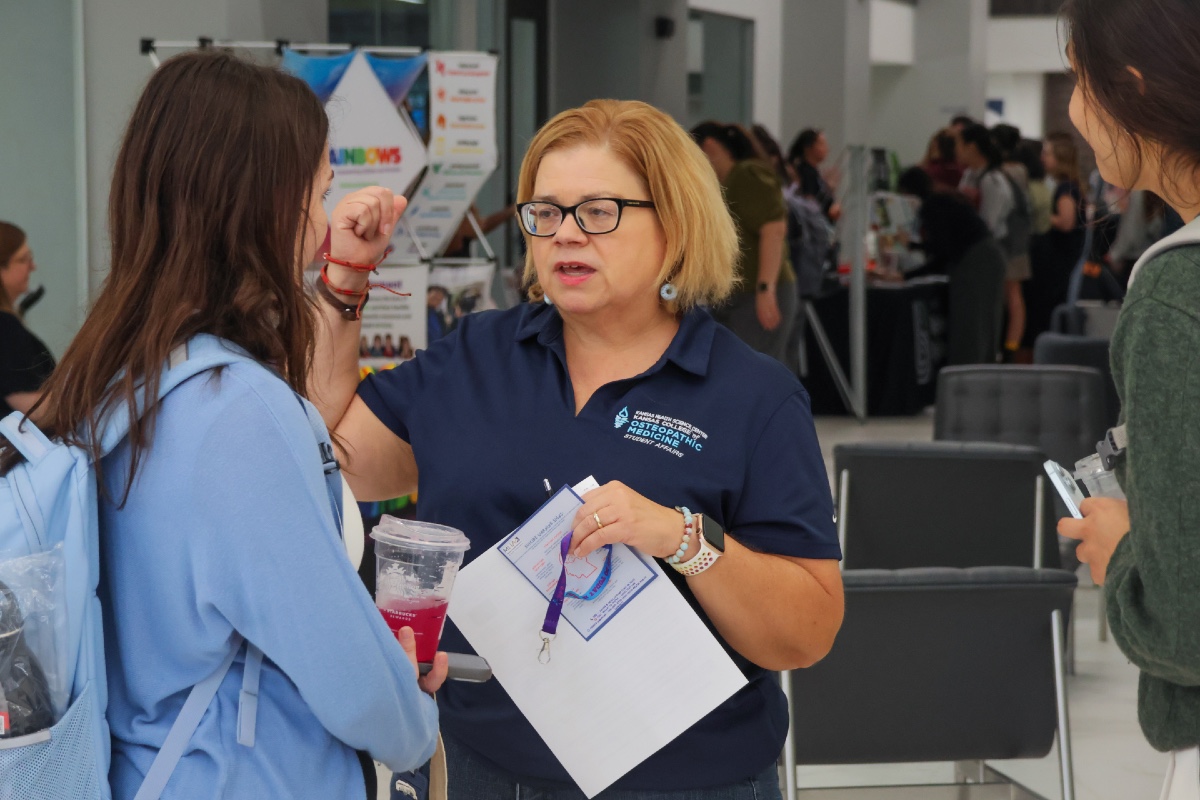
In September, more than 30 Wichita nonprofit organizations visited KansasCOM’s campus to connect with medical students eager to volunteer.
Organizations such as ICT Street Team, Rainbows United, Bike Walk Wichita, and Ascension Via Christi showed medical students the many ways they can serve, from helping with recreational activities and program support to simply offering companionship to patients who could use a friend.
“We have several hundred medical students, and they all want to give back,” says Becky Springer, Community Engagement Specialist. “This is an opportunity for the students and the agencies to find common interests and for the students to learn ways they can step in. So, it’s really a win-win for everybody.”
One such agency is Dear Neighbor Ministries, based in Wichita’s Hilltop neighborhood, where poverty rates are among the highest in the city. According to their website, Dear Neighbor serves an average of 1,400 individuals each month through food assistance, financial support, and case management services as part of the Congregation of St. Joseph Mission Network.
“Sometimes our calling is simply to be the bridge,” says Jeremiah Ortiz, Program Director at Dear Neighbor Ministries. “[Health] goes far beyond just the physical. It’s also mental and even, in some cases, spiritual… It makes what they’re doing here absolutely relational.”
Last summer, Dear Neighbor invited KansasCOM students to stock its food pantry and design a message for their neighborhood marquee. The phrase they chose, “Your Health Matters,” conveyed the core message of their learning experience. This year, Ortiz says the organization hopes to welcome student volunteers to its community garden.
For KansasCOM students, community engagement is part of becoming a physician who understands the patients they serve.
“I want to be more involved in the community that I’m taking care of,” says second-year student doctor Sanya Vatwani. Originally from St. Louis, Missouri, Vatwani plans to bring her ER experience to her DO practice in emergency medicine. “I’m new to Wichita. I’m not from here, so I just want to be as involved here as I was back home.”
Stepping into the community allows medical students to offer their time to help others while seeing how life outside the clinic shapes health within it. Just as the body’s systems are interdependent, so too are the members of a community, and this lesson will guide these future DOs as they care for patients throughout their careers.
This work is supported in part by Bank of America, whose investment helps KansasCOM expand community engagement efforts including a dedicated community service specialist who connects students with volunteer opportunities. Their partnership strengthens programs like the Community Engagement Fair, helping future physicians better understand the social factors that shape health and deepening their commitment to serving the Wichita community.