
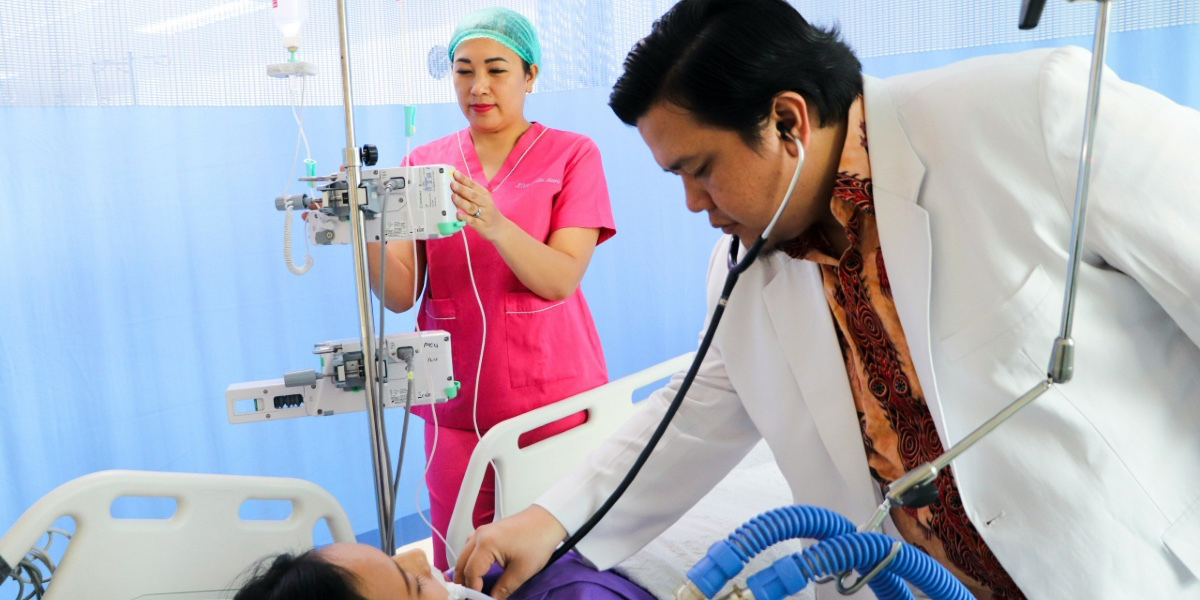
KansasCOM’s community-based clinical rotations build key skills for future DOs, including clinical judgment, clear communication, and patient-centered care.
By Sydney Strickland
Clinical rotations are where Kansas College of Osteopathic Medicine students begin applying their training in real care environments. In the Doctor of Osteopathic Medicine (DO) program, rotations take place in community-based sites across Kansas, giving students exposure to both rural and urban settings where physicians are urgently needed. With the physician shortage, continuing to strain health care access, KansasCOM emphasizes hands-on experience that helps future DOs learn to think clinically, communicate effectively, and support patient needs in real time.
Here are eight essential skills you’ll build during your clinical rotations with KansasCOM.
1. Clinical Decision-Making in Diverse Rotation Sites
KansasCOM’s nine different clinical rotations expose you to diverse environments, from busy urban hospitals to smaller rural clinics.
“In a rural environment, you don’t have that specialist at your side, so that you have to really learn to manage many more things than you might have to in an urban environment,” says Associate Dean of Curriculum, Clinical Medicine, and Graduate Medical Education Dasa Gangadhar, MD. “Being able to see those complementary and synergistic practice styles really helps our students round out their clinical education.”
Whether making quick decisions in emergencies or prioritizing treatment plans, KansasCOM students learn the clinical judgment needed to provide optimal patient care.
2. Adaptability to High-Pressure Scenarios During Clinical Rotations
Clinical rotations immerse students in unpredictable environments, teaching future physicians how to adapt to constantly evolving scenarios. Hands-on medical training teaches you to manage a wide spectrum of patient care, developing resilience and flexibility under pressure.
“Experiencing intense moments prepares students to be able to handle those situations when they’re on the front line in the future,” says Dr. Gangadhar. “Whether you’re the operating surgeon or the student, everybody is in that pressure cooker, because that patient’s life depends on you.” This exposure alongside mentor support builds the foundation for confident, adaptable practitioners.
3. Professionalism and Ethical Judgment in Real Clinical Settings
During clinical rotations, students witness how ethical decision-making is crucial to medical practice. You’ll encounter the realities of medicine through which professionalism and ethical judgment skills are lived and observed in the day-to-day practice of patient care.
At KansasCOM, professionalism means a commitment to responsibility and respect that starts with training and evolves throughout your career. Faculty mentors support you, helping you reflect on your decisions and guide you in upholding professional standards. With their guidance, you learn to uphold high professional and ethical standards in medicine.
4. Patient-Centered Communication Across Care Teams
At KansasCOM, you learn that listening is a powerful diagnostic tool. “Patients will tell you far more than you can ever imagine, and far more than an X-ray or a lab test will tell you,” Dr. Gangadhar says. Asking thoughtful questions and listening to the answers is core to patient-centered care, a methodology central to osteopathic medicine.
“Medicine has gotten increasingly complicated, and the only way to navigate these complex situations is to be able to play well and work well within teams,” says Dr. Gangadhar. “You’re going to get stumped; you’re not going to know what’s going on.” Communication with patients and teams is what clarifies uncertainty.
5. Clinical Confidence and Judgment in Real Care Settings
Your initial patient-care exposure starts early and builds toward hands-on, clinical engagement. During rotations, you will have opportunities to participate in patient rounds and contribute meaningfully to care decisions. Whether presenting cases to other professionals or explaining diagnoses to patients, you will learn foundational skills needed to become a confident medical practitioner.
Being a leader in medicine means being proactive in every moment. Asking questions and taking ownership helps you to build trust and strengthen your care teams from within. Whether participating in rotations related to hospital administration or chief medical officer roles, KansasCOM provides opportunities to cultivate crucial skills.
6. Human-Centered Care and Empathy in Community Rotations
Every patient is more than their symptoms. By working in diverse communities, you learn how patients’ unique backgrounds influence their health.
Dr. Gangadhar says of KansasCOM students’ clinical rotations, “The demographics of the patients that they’re treating very much mirror the demographics of the communities in which they are practicing or being students in.” Learning within these settings helps you practice diagnostic reasoning for the variety of patients you’ll see in real practice.
“No patient really cares how much you know until they know how much you care,” Dr. Gangadhar says. “The pillars of medical care involve the art of human touch, compassion, and empathy.”
7. Time Management and Efficiency in Busy Clinical Environments
As you navigate real health care environments, time management becomes a nonnegotiable skill. Balancing competing priorities is essential, and building routines helps you stay focused and efficient. Your rotations challenge you to juggle responsibilities within the flow of a busy clinical environment, including:
- Coordinating with care teams
- Preparing for early morning rounds
- Organizing patient information quickly
- Preparing case presentations under time pressure
Through it all, you have to prioritize the most urgent need: the patient in front of you. You’ll learn to stay organized in a fast-paced setting while ensuring quality and compassion in patient care never get lost. Once you’re functioning efficiently in your rotations, a full day at a clinic becomes purposeful instead of overwhelming.
8. Collaboration and Teamwork in Community-Based Clinical Training
During clinical rotations, you’ll work alongside nurses and physicians, witnessing the teamwork that defines effective care. You’ll develop the collaboration and situational awareness it takes to thrive in complex clinical settings.
“It is a well-orchestrated dance and everybody has to work harmoniously together,” Dr. Gangadhar says, “You have to work well with your paramedics, nurses, and ultrasound technicians, as well as the residents and attending physicians. It really is a team effort.”
Prepare for Clinical Rotations That Shape Real DOs
KansasCOM’s community-based clinical education prepares you to step into residency with the skills, confidence, and whole-person perspective today’s patients deserve. If you’re ready to become a DO who leads with competence and compassion, take the next step.